
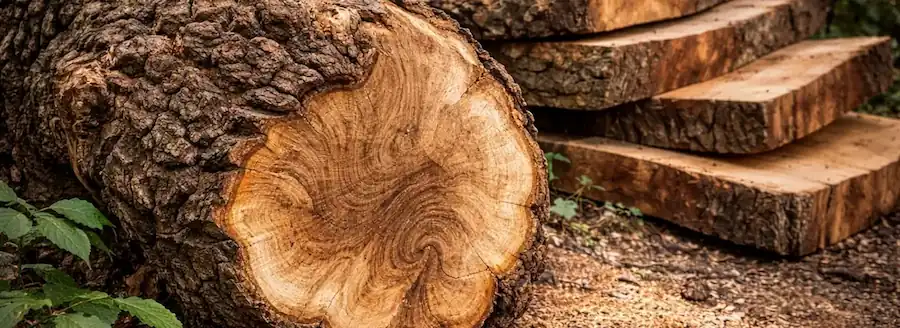
Urban Wood Harvest Archive
Documented tree harvests and salvaged timber recoveries that form the provenance foundation of the BurlBlade archive.
Each harvest represents a single tree or material source within the archive. From this origin point, individual specimens are produced, catalogued, and linked through the BurlBlade system, connecting harvest, species classification, and finished material.
The Urban Wood Harvest Archive documents each recorded tree recovery within the BurlBlade timber provenance system. Every harvest represents a specific tree or material source from which individual specimens are milled, catalogued, and preserved within the archive.
Within the Urban Wood Harvest Archive, each harvest acts as the origin point of the material lifecycle. From this starting point, specimens are processed, classified, and linked across the system, connecting harvest records to species documentation and finished material.
Harvest pages provide the environmental and geographic context of the tree, including where it grew, how it developed, and the individual pieces produced from that source. This allows each specimen to be understood as part of a larger material story rather than as an isolated object.
Individual specimens from each harvest are catalogued in the Specimen Registry, with classification linked through the Wood Species Guide, including documented material such as Plum Wood (Prunus).
Recovered timber reflects the natural growth conditions of each tree, resulting in variation in grain structure, density, and internal character across every harvest. Urban environments in particular introduce unique stresses such as restricted root space, pruning, and structural damage, all of which influence the final material.
The Urban Wood Harvest Archive provides a structured record of salvaged timber sources, ensuring that each piece of wood can be traced from its origin through processing to its final use. This approach supports both material transparency and long-term documentation of urban wood recovery.
What Is an Urban Wood Harvest?
An urban wood harvest refers to the recovery and processing of timber from trees removed due to safety concerns, storm damage, disease, or land development. Instead of being discarded, these trees are salvaged and transformed into usable material, preserving both their structural integrity and visual character.
Within the Urban Wood Harvest Archive, each recorded harvest represents a single documented tree. This ensures that every specimen can be traced back to its origin, maintaining a clear relationship between the material, its environment, and its transformation into finished form.
Urban timber often displays irregular grain patterns, internal stress features, and unique structural variation. These characteristics are shaped by the conditions in which the tree grew, including surrounding infrastructure, soil limitations, and environmental pressures.
For additional technical reference on wood properties and how growth conditions affect timber structure, see The Wood Database .
2026 Harvests
- PB2601 — Plum Burl — Sunnyridge, Germiston, Gauteng, South Africa, Includes live edge slices, wood cookies, slabs, and planks produced from a single plum burl harvest
- GS2602 — Ground Stump Root Timber — Edenvale, Gauteng, South Africa, Includes root slabs, voided sections, and wood cookies formed from a ground stump root system
About the Harvest Archive
Each harvest page documents the transition from tree to material, recording how individual sections are processed into distinct timber specimens. This structured approach ensures that every piece within the archive remains traceable and connected to its origin.
Because every tree develops under different environmental conditions, each harvest produces unique grain formation, structural variation, and natural features that cannot be replicated. These characteristics define the visual and physical identity of the material.
Through the Urban Wood Harvest Archive, BurlBlade preserves not only the material itself, but also the documented relationship between species, origin, and individual specimen, forming a complete and connected archive system.