← Back to the GS2602 Ground Stump Root Harvest Archive
Root Slab for Epoxy Resin – Canyon Form (GS2602005)
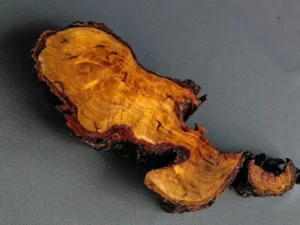
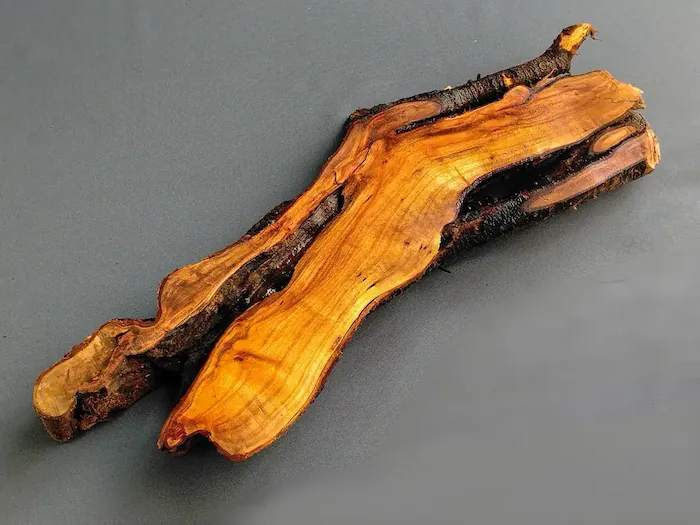
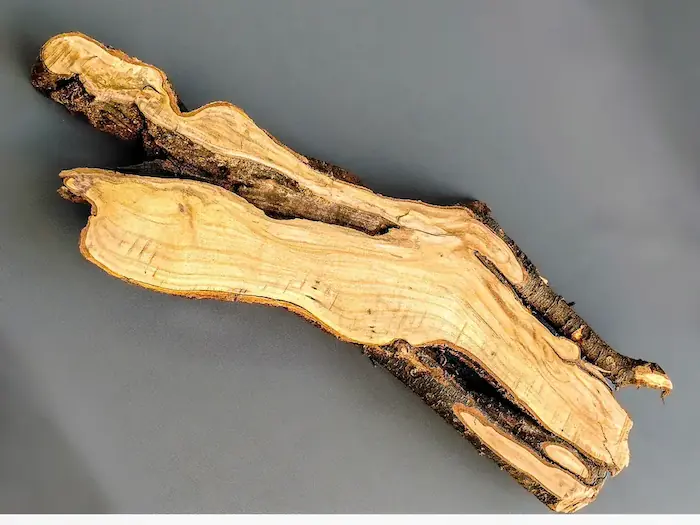
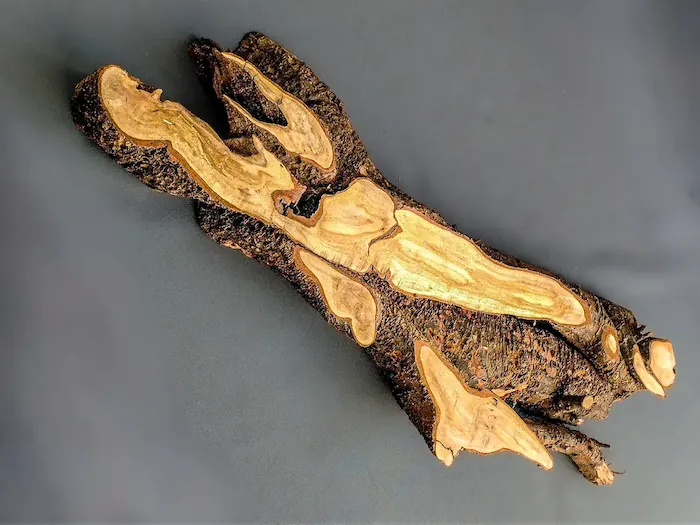
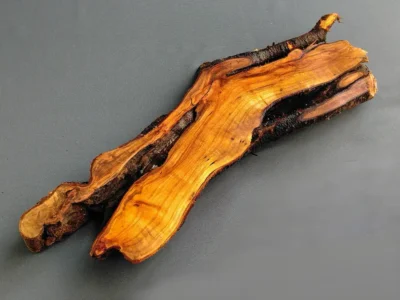
This root wood slab (GS2602005) features a deep canyon-like void and bifurcated structure, suited to resin casting and sculptural applications. Cut from a root-derived section in Edenvale, Gauteng, the specimen presents two parallel masses divided by an extended canyon void, with grain flowing continuously along both sides of the separation.
Documented as specimen GS2602005, this root wood slab presents a bifurcated structure with a pronounced central separation and strong directional grain flow across both sections.
Specimen Characteristics — GS2602005
This specimen (GS2602005) represents a root-derived section from the GS2602 harvest, where the material forms two parallel masses separated by a deep central crevasse. Grain follows a continuous directional flow across both sides of the separation, creating structural tension and visual contrast within the piece.
Visual Character
- Split slab structure forming two parallel sections
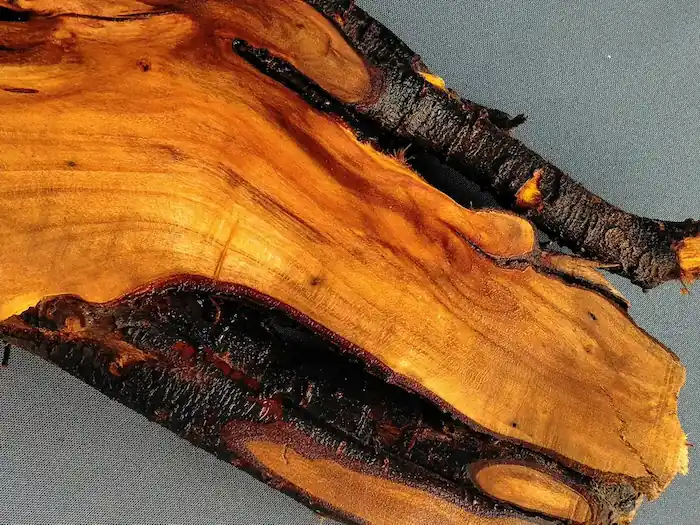
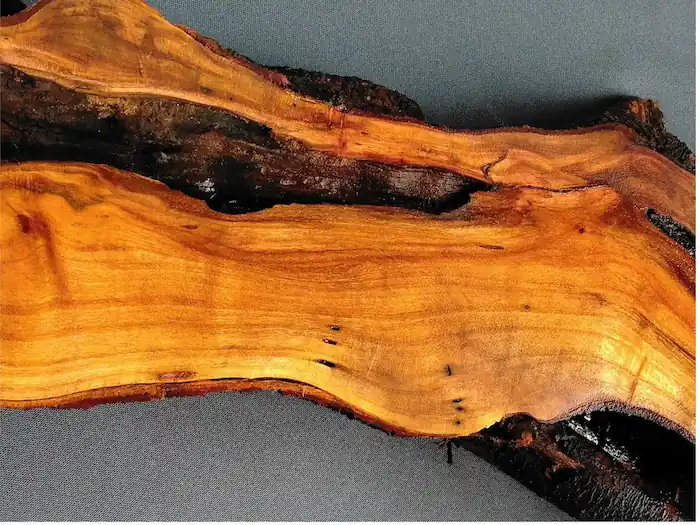
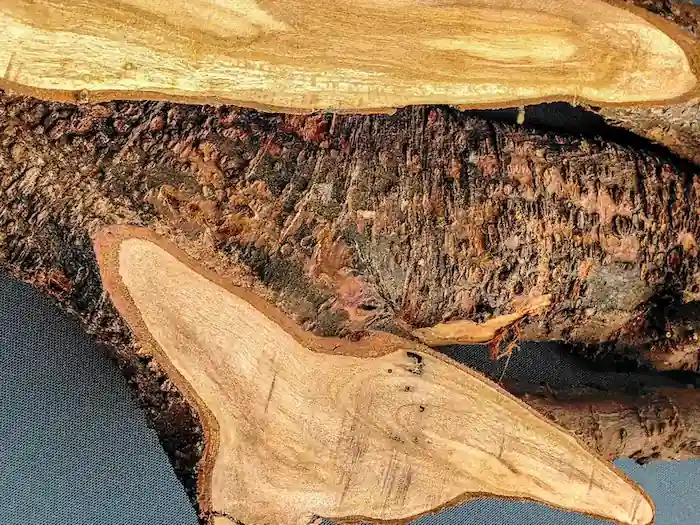
- Deep canyon-like void with exposed internal texture
- Flowing grain movement across both sides
- Asymmetrical spur extending from the main structure
- Live-edge bark forming a rugged internal boundary
Physical Specifications
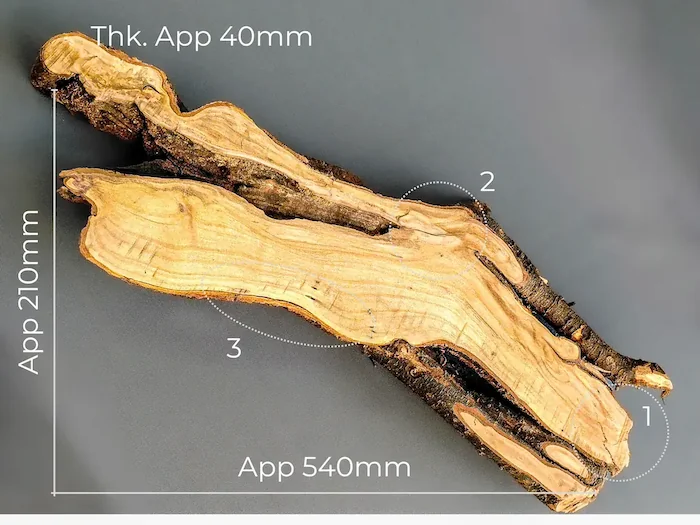
Length: 540 mm
Width: 210 mm
Thickness: 40 mm
Weight: 1200 g
Moisture Content: 10–12%
Condition Report
Flat: Yes
Twist: None
Bow: None
Natural Hairline Cracks: Slight
Structural Cracks: None
End Splits: None
Bark: Present
Sapwood: Present
Surface Preparation: Sanded to 100 grit
Condition: Fragile
This specimen is structurally delicate due to natural separation and bridge zones. A hinge-like section is present where the slab diverges, and the piece may break during handling or machining if unsupported. Stabilisation is required before use.
Suggested Uses
- Epoxy river table features
- Resin casting with deep void fills
- Decorative wall-mounted centrepieces
- Sculptural woodworking applications
The deep central void makes this piece ideal for dramatic resin applications. Explore more unique material options in our
wood specimens collection. Stabilisation is required before use. Not recommended for structural applications.
Working With Root Flare Timber
Root-derived timber develops under structural stress, producing irregular grain flow, density variation, and natural separations. These characteristics create both visual interest and structural challenges.
Fragile bridge zones and internal cavities should be stabilised before machining or resin work.
For technical reference on wood properties, see
The Wood Database.
Timber Origin
Urban salvaged timber from Edenvale, Gauteng, South Africa. Recovered from a ground stump root system and milled locally as part of the GS2602 harvest.
Natural Material Notice
Wood is a natural material and may contain variation in grain, colour, and internal structure. All photographs show the exact item being sold.
Provenance Certificate
Specimen ID: GS2602005
Harvest: GS2602
Origin: Edenvale, Gauteng, South Africa
Species: Undetermined (Root-Derived Timber)
Cut Type: Transverse cross-section (root)
One-off natural specimen.
This piece cannot be restocked once sold.
This specimen is part of the documented BurlBlade archive system.
View in Specimen Registry
View Harvest Archive
Related Specimens from GS2602
GS2602001 – Root slab
GS2602006 – Root slab
GS2602010 – C-profile cookie