← Back to the GS2602 Ground Stump Root Harvest Archive
View full-resolution images:
Live Edge Wood Cookie – Sculptural U-Shape (GS2602004)
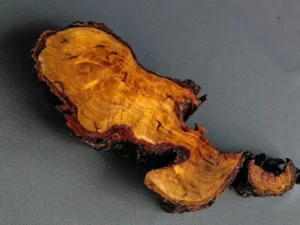
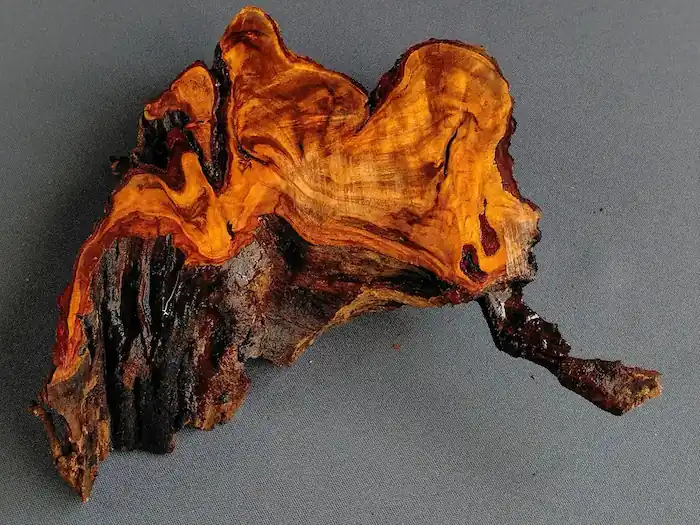
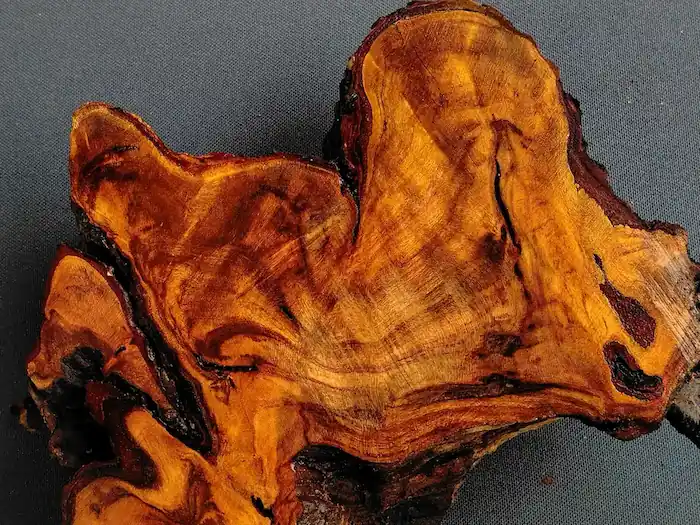
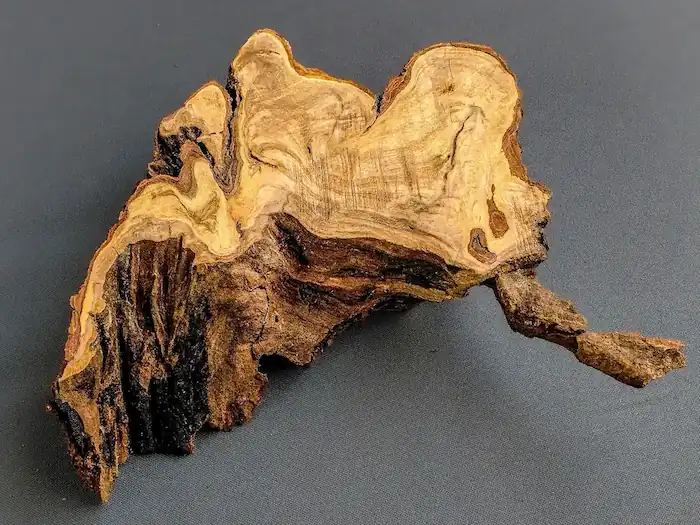
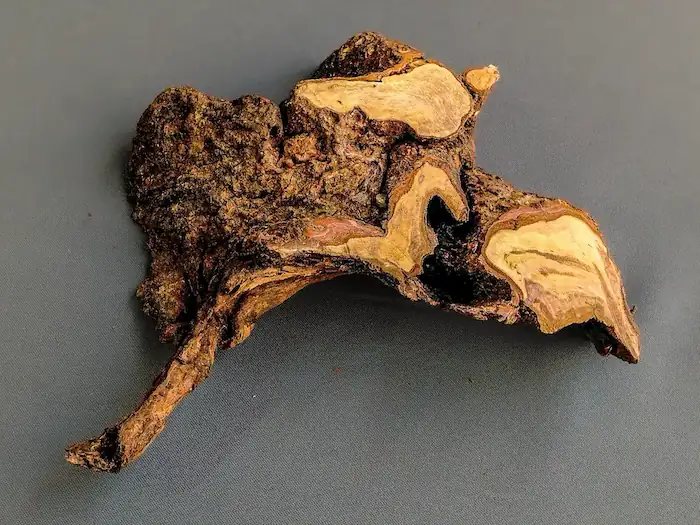
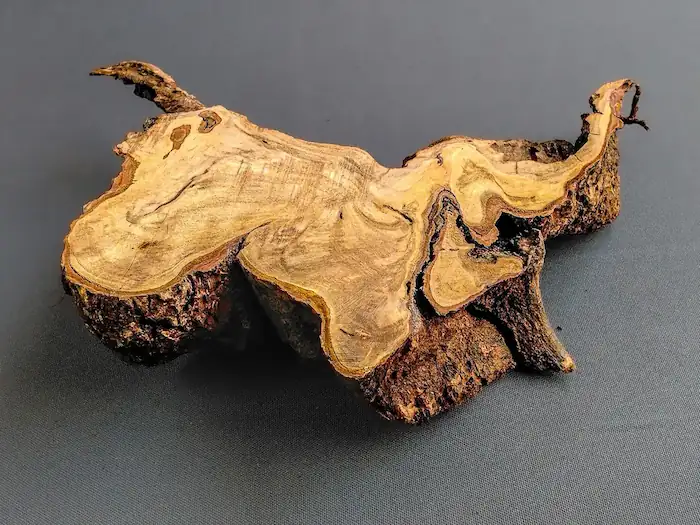
GS2602004 takes an amorphous U-shaped cross-section, built around a pronounced central void with one side extending further than the other in a deliberately asymmetrical form. Multiple dense knot formations sit through the grain alongside slight natural hairline cracking. Bark is attached and stable, with light tool marks from milling still visible on the surface. Recovered from Edenvale, Gauteng, 3 February 2026. Field seasoned, MC confirmed at 10–12% on a pin meter reading taken on a sanded surface, 1 March 2026. One piece. Exact item shown.
Specimen Characteristics — GS2602004
This specimen (GS2602004) represents a cross-sectional root slice from the GS2602 harvest defined by a contained U-shaped void. The structure maintains a continuous outer frame surrounding an open cavity, with grain flowing around multiple dense zones and reinforcing the integrity of the overall form.
Visual Character
- U-shaped amphitheatre form with deep central void
- Radial grain flowing around dense heartwood zones
- Natural cavity suitable for resin or feature casting
- Tight knots forming visual focal points
- Live-edge perimeter with stable bark attachment
These are natural characteristics of the wood, not defects.
Physical Specifications
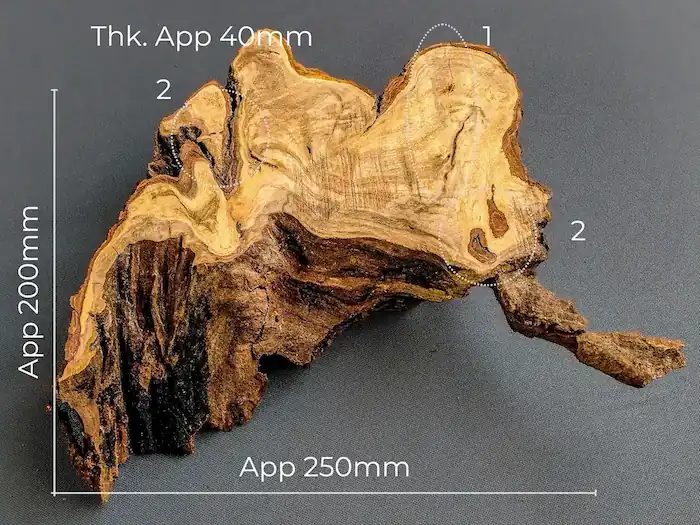
Length: 250 mm
Width: 200 mm
Thickness: 40 mm
Weight: 400 g
Moisture Content: 10–12%
Condition Report
Flat: Yes
Twist: None
Bow: None
Natural Hairline Cracks: Slight
Structural Cracks: None
End Splits: None
Bark: Present (firm)
Sapwood: Present
Surface Preparation: Sanded to 100 grit
Condition: Stable
Suggested Uses
- Resin casting and void fill applications
- Decorative wall-mounted pieces
- Charcuterie boards (sealed)
- Small furniture features (stabilised)
The enclosed void structure makes this piece particularly suitable for controlled resin casting.
Explore more material options in our wood specimens collection.
Stabilisation may be required depending on final use.
Not recommended for structural applications.
Working With Root-Derived Timber
Root-derived timber develops under structural stress, producing irregular grain flow and natural internal variation. In cross-section cuts, this results in radial grain patterns, voids, and density shifts.
Hairline cracks and internal cavities can be stabilised or incorporated into resin-based designs.
For technical reference on wood properties, see The Wood Database.
Timber Origin
Urban salvaged timber from Edenvale, Gauteng, South Africa.
Recovered during tree removal and milled locally as part of the GS2602 ground stump root harvest.
Natural Material Notice
Wood is a natural material and may contain variation in grain, colour, and structure.
All photographs show the exact item being sold.
Provenance Certificate
Specimen ID: GS2602004
Harvest: GS2602
Origin: Edenvale, Gauteng – South Africa
Species: Undetermined (Root-Derived Timber)
Cut Type: Transverse cross-section (Root)
This specimen is part of the documented BurlBlade archive system.
View in Specimen Registry
View Harvest Archive
One-off natural specimen.
This piece cannot be restocked once sold.
Related Specimens from GS2602
GS2602003 – Hook slice
GS2602012 – Crescent cookie
GS2602002 – Root slab